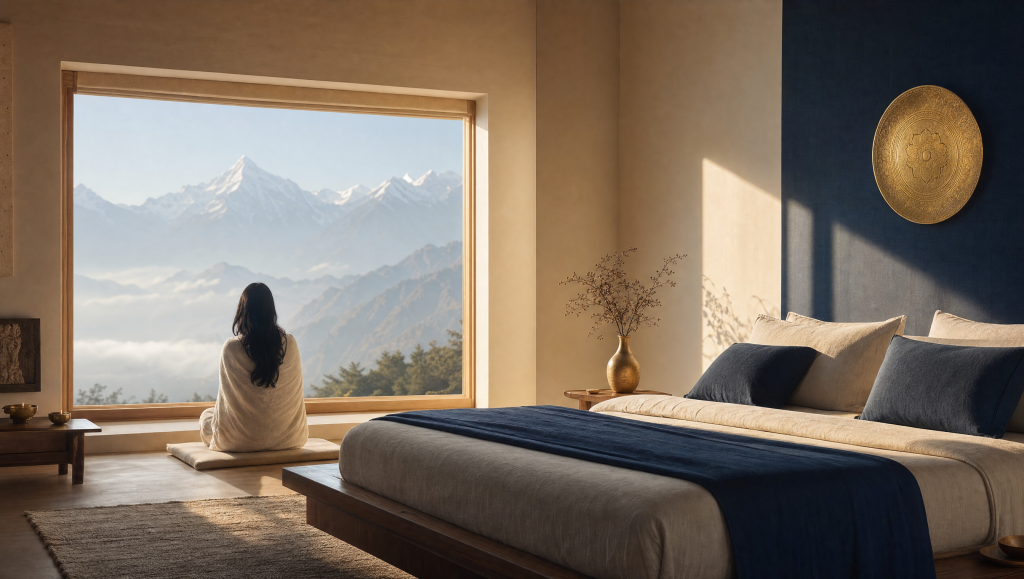
In Vastu tradition, the bedroom is more than a place to rest. It is seen as a space where the body and mind reset. Because of that, the direction of the bed and the position of the head during sleep have long been discussed as subtle influences on energy.
Sleep as energetic reset
The quality of sleep affects how we meet the day. Vastu approaches this not through medical claims, but through the idea that orientation matters. Just as certain directions receive more morning light or evening calm, they may also carry a different symbolic quality.
Traditional direction preferences
Swami Aditya mentions a simple traditional guideline:
“Vienu sleep your head should be under in south or east.” (01:15:13–01:15:17)
In other words, the traditional preference is to sleep with the head toward the south or the east. South is often associated with grounding and protection, while east is linked with sunrise, clarity, and spiritual energy.
These are preferences from a traditional system, not prescriptions for health or relationship success.
Applying tradition with common sense
If adjusting your sleep direction feels comfortable, you can try it. If it does not, good sleep habits—regular timing, fresh air, limited screens, and a calm room—matter far more than any traditional rule.
If this perspective resonates, you are welcome to explore more teachings, watch the source video, or join the newsletter for future reflections.
This article shares spiritual and cultural perspectives from the Vedic tradition. It is not medical, psychological, financial, or legal advice and does not replace consultation with a qualified professional. Vastu is a traditional spatial philosophy, not a medical or financial guarantee.